Tuesday, 28 August 2018

Run Lola Run

Today, I am going to analyze the editing techniques in Run Lola Run which directed by Tom Tykwer and discuss how the techniques are important to the narrative development.

Summary of films:
Run Lola Run is a 1998 German film written and directed by Tom Tykwer. The story is about a woman who needs to get 100,000 Deutsche mark in the next 20 minutes to save her boyfriend’s life. Lola runs to save her boyfriend was divided into three runs. Each run starts the same way, but develops differently and the different outcome. At last, she changes the events according to her choices. She saves her boyfriend and gets another 100,000 Deutsche mark.

Editing Techniques  
Editing is a part of the post-production process of filmmaking. The process of editing involve with the raw footage, selecting shots and combines them into sequences which create a motion picture. A film editor must creatively work with the layers of images, story, dialogue, music, pacing, as well as the actor’s performances to convey a story to the audience. The relationship between shots may be graphic, rhythmic, spatial or temporal. Graphic match is good in relating two different states of disconnected scenes, or in helping to establish a relationship between two scenes. By using an ending frame with a same compositional elements such as shape, color, size, and so on as the beginning frame of the next shot, to have a smooth transition. Rhythmic editing usually dictated by music. In this case, the musical relationship between shots takes the major stage. Establishing Shot Is usually the first few shots in a sequence, because it serves to situate the audience within a particular setting and to introduce an important character. Normally, establishing shots are extreme long shots or long shots, followed by progressively closer framing. This is the other way to tell the audience where the character is.  Temporal relationships involve with a continuity editing which is match on action, it is an editing technique used in continuity editing that cuts two different shot of the same action together at the same moment in the move. Next, the continuity editing is to maintain the viewer’s understanding of the story. It is included with 180 degree rule, 30 degree rule, eyeline match, shot-reverse shot. Sound in film narrative may be identified as either diegetic or non-diegetic. The presence of sounds alongside the image creates larger cinematic units.

Analysis
 Firstly, the editing techniques in Run Lola Run that I going to discuss is match on action in temporal relationships. For example, Lola runs all the way to save Manni, the long shot was applied to it. At the same time, due to the same running movement in different shot and setting, the match on action was also established in the scene, it conveys to the audience that Lola keep running to save Manni at 12:00pm by the water tower around the corner.
Otherwise, in the picture below, jump cuts are used to create a discontinuity in editing. This kind of cut suddenly communicates the passing of time.  
As a mean of continuity editing, parallel editing also used in Run Lola Run severally, example the first run, Lola runs to her father’s bank, then cut to the shot of Manni uses a blind woman’s phone card to call his friend to borrow money, then the eyeline matches are used, Manni is looking at something off screen, the cut to the clock that place on the wall, then cut to the Lola is running, then cut to the shot of her dad and his pregnant mistress, then cut to the scene that Lola reach his father’s bank , and cut to her father and his mistress, then cut to Lola open his father’s office room and an eyeline matches of Lola see his father and his mistress. This technique of cut scene used to portray multiple line of action occurring in different place simultaneously. I think the clock and the eye view of Lola saw her father and his mistress play the main shot in these parallel editing because the clock describes the time is moving forward. At the same time, Lola is running and those cut scene between Lola and his father give some type connection between them, after she reached father’s office room, these connection give the viewer feel reality and know that it's happening at the same time.


Parallel Editing plays the main editing technique in Run Lola Run. This editing technique used in three run by Lola. The editor also used multiscreen to show it happen at the same time in directly. 


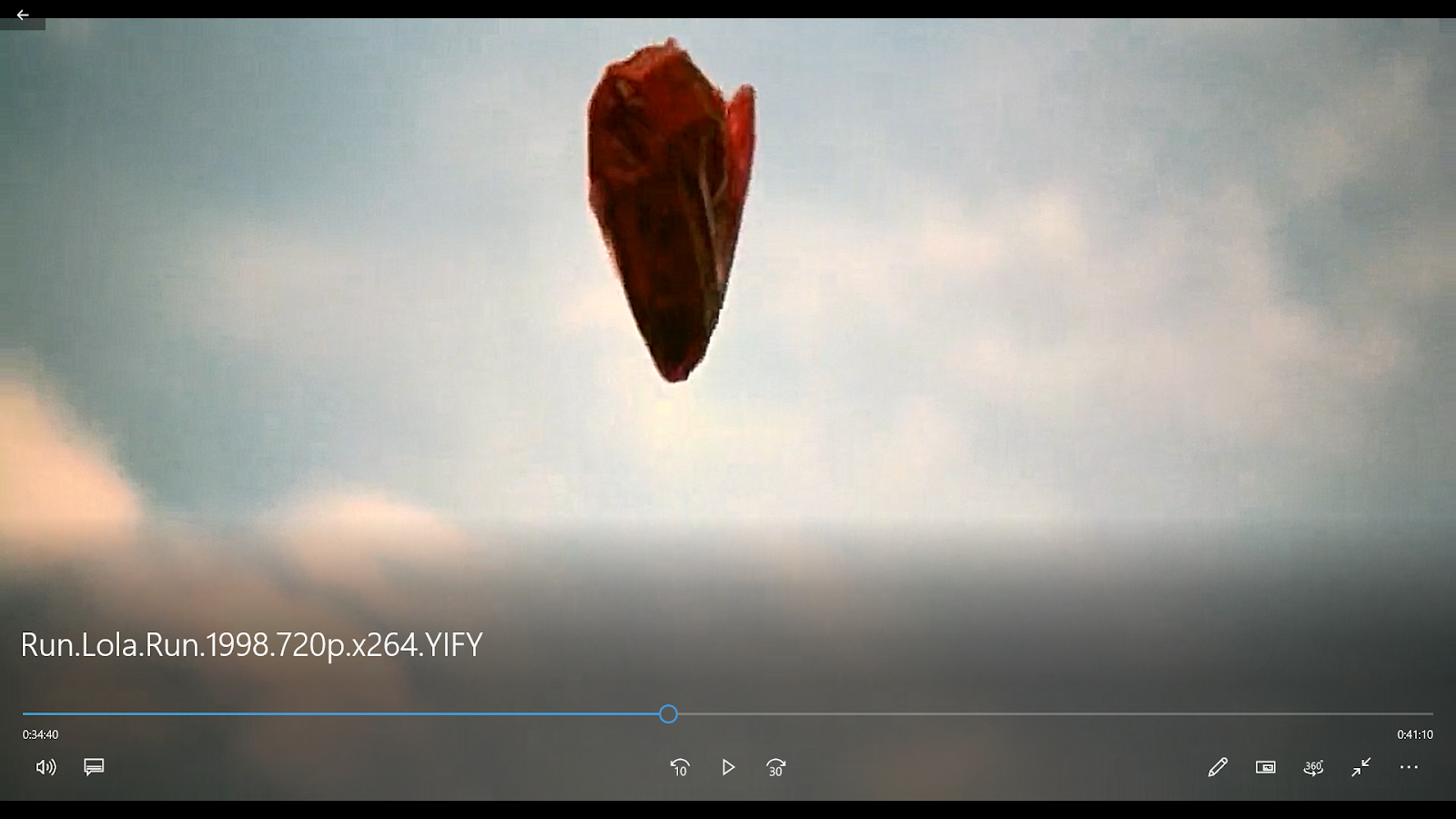
Next, a graphic match cut between the falling red plastic bag and the red telephone receiver when the transition to the restart of her second run.   
Freeze frames are also used to show the life of characters that Lola faces on the street while running. They are given as still images to the audience to show some sections of their lives. In each runs with different choices, we can see an obviously compare with a woman pushing a baby carriage, who is shown to later steal a baby after having lost custody of her own. Compare with the second run, who later wins the lottery and lives a life of luxury. The same editing technique used to present the life of other characters too.   


An important element to the film though is the soundtrack. The techno background music makes the audience to follow Lola’s rhythm and share her anxious feelings. The soundtrack is another key that reveals that Lola more clearly about what she is going to do for her third run. Through the non-diegetic sound which is techno background sound, the audience experience three different running and overcomes. For example, at her first run to save Manni, the beat is stronger and faster, compared to the third run, the music is softer. It gives the sensation that it is her last run to change her and Manni’s life. Moreover, in some scenes, the audience hears the voice of Lola, although she does not speak. These inner diegetic used to give the audience know her mind. Diegetic sounds help the audience to grasp the overall situation of Lola.

Conclusion
Now, I will conclude how the editing techniques are important to the narrative development because it could catch the audience attention. Especially, the soundtrack and the notion makes the audience more curious and nervous about the end of the story. The movie is full of postmodern elements which have gained its place as one of the great films from the genre with its irregularity and discontinuity editing technique. After watching this film, I noticed that the film editor play a main role in the filmmaker. A lot of editing technique need to learn and explore it too. The film is really recommended to teenager or editor nowadays to watch it, the editing technique of this film can compare with the film nowadays even this film was made in 1998.


Wednesday, 22 August 2018

Amelie


Today, I am going to study cinematography in Amelie, a 2001 French romantic comedy film directed by Jean-Pierre Jeunet.

Summary of films:
The film is about an eccentric introverted girl who decides to change the lives of those around her for the better life of a tobacco dealer, a painter, and three lonely people. At the same time, she is struggling with her own isolation, as she is fearful to step out of her comfort zone as being alone and an outsider is something she has always known. At the end of the film, due to the painter, Dufayel encourage her to pursue Nino, they are beginning of a relationship.

Cinematography
The word “cinematography” is based on the Greek kinema, meaning “movement, motion” and graphein meaning “to record”, together meaning “recording motion”. The word used to refer to the art, process, or job of filming movies, but later its means motion-picture photography. It involves such techniques as the general composition of a scene; the lighting of the set or location; the choice of cameras, lenses, filters, and film stock; the camera angle and movements; and the integration of any special effects. All these component may involve a large of crews whose responsibility to achieve the photographic images and effects desired by the director.

Analysis
The beginning of the film was a wide angle shot of Rue St Vincent, Montmartre, while used a special narration way and authoritative voiceover to descript the scenes. The director attempts to portray a sense of strange through a number of different events to present the birth and the childhood of Amelie, and used the strange personal hobbies to introduce the people surrounding her, such as her father, mother, colleague and so on. The director highlights how innocent of Amelie when a kid at the opening credits by using a close-up shot and some flashlight and colour lighting to reveal the playful Amelie. Otherwise, the director likes to play around the camera angle and camera mobility like pan, tilt, zoom in, zoom out and so on to introduce her parent and the childhood of the Amelie. As example: The scene where introduce Amelie’s father, from extreme long shot to show the setting of the character belongs to, then zoom in to close up shot, then cutscene to the toilet, use tracking shot to show the toilet to the character to descript he dislike peeing next to someone else, after then use whip-panmean very fast pan from two ladies to Amelie’s father and crane shot to his sandals and so on. The director also like to use depth of field to lead the audience to focus on the main part of the scene.

The most unforgettable scene for me is when Nino late for the date at The Two Windmills CafĂ© at 4pm. Amelie start thinks about the two possible explanations why Nino late for the date. The scene uses black and white to present the imagination of Amelie. The timing of the scene with the coordinate of the narrator to narrate the process of the possible explanation is really funny. Its also reveals the characteristic of the Amelie is, which is rich imagination as she was a kid, cause of deprived of playmates and loneliness. The director highlights how a person’s childhood will have a huge impact on how they turn out as an adult. For example, Amelie’s childhood is very lonely. This makes her fear to step out of her comfort zone as being alone and an outsider even she is given an opportunity to give the book back and talk to Nino in the first place.


Conclusion

After watching this film, I noticed that this is why the movie gets a lot of good reviews and is one of the biggest international successes for a French movie. The unique storyline coordinate with outstanding cinematography. Great colours, amazing plot, really good actors and a warm nostalgic feeling of child's innocence. Recommended.   

Tuesday, 21 August 2018

Fantastic Mr.Fox


Today, I am going to analyze the mise-en-scene in Wes Anderson's Fantastic Mr.Fox.


Summary of films:
This is a 2009 American stop-motion animated comedy film based on Roald Dahls children novel. The film is about a fox who name Mr. Fox breaks a promise to his wife and farmers after 12 years of bucolic bliss. He steals food and raids the farms of their human neighbors, Boggis, Bunce and Bean. Giving in to his family and their animal friends in trouble. When the farmers force Mr. Fox and company deep underground, he has to resort to his natural craftiness to rise above the opposition.

Mise-en-scene
Mise-en-scene is an expression used to describe the design aspect of a theatre or film production. It is also means that everything of the shot which are staged in front of the camera at the time of filming, such as setting, props, costume and make-up, lighting and performance. Those elements of design help express a films vision by generating a sense of time and space, as well as setting a mood, and sometimes suggesting a characters state of mind. As I mentioned before, there are five key aspects. First key aspect is settings, Settings creates both a sense of place and a mood and it may also reflect a characters emotional state of mind.  It can be entirely fabricated within a studio or filmed on-location. The second key aspect is props, Props is a property used to tell the story just as much as the characters and locations do. They can serve to drive the narrative or become a motif to tell the themes of the film. After then, the third key aspect is costume, Costume can include both makeup or clothes that characters wear used to convey a characters personality or status, and to signify these differences between characters. Next, Lighting. The intensity, direction, colour and quality of lighting can influence an audiences understanding of characters, actions, themes and mood. Light (and shade) can emphasize texture, shape, distance, mood, time of day or night, season, glamour. It also can create attention on the particular elements of the composition. Lastly, the last key aspect is Performance, The method actors job is to become one with the characters dress, education, mannerisms and so on.

Analysis
Settings

There are a lot of setting applied in this film such as Berks Squar Farm, Mr. Foxs hole house and tree house, Lawyer Badgers office, Boggiss Farm, Bunces Farm, Beans Farm, Ashs school lab, stadium, Beans house, Town and Boggis, Bunce, Bean International Supermarkets. The whole settings play around the composition which are foreground, middleground and background. However, the most unforgettable setting is Boggiss Farm which is Mr. Fox and Kylie steal chickens from the first place because the setting full of challenge, as example beagle security, high-voltage fence. At this setting we can see the characteristic from Mr. Fox and Kylie in their way stealing the chicken. Even though, Kylie is looking blur and laggard but in this place, we can see that he is more careful than Mr. Fox, he saw the electric warning and he found another way which not obstacle to get in to the room 34 chicken house. It change my perspective to Kylie. 
      
Props

One of the props using in this film is blueberries and attached each one with high-potency sleeping powder, this is the trick use to make Beagles fall asleep then they can easily escape from Beagles.
    
Next, put bandit hat on when they are going to steal produce and poultry from the three farms and when the animals combat with the three farmers. For me, the bandit hat means a thief that full of craziness as a wild animal.
 
 
Then, the tail from Mr. Fox. Due to Mr. Fox steal produce and poultry from the three farms. The farmers decide to kill Fox, but only shoot off his tail. Ash and Kristofferson are going to steal back Mr. Foxs tail at Beans home, when they arrival, they are interrupted by the arrival of Beans wife, Ash escape but Kristofferson is captured. After then, a series of stories happen cause of it.  


Lastly, this whack-bat is one of the spot event in the school. Ash finds this situation intolerable; Kristofferson is apparently superior to him at almost everything, such as diving, fight and whack-bat. Lastly, Ash show his athletes potential by apply what he learn about whack-bat player to the battlefield and save his father, Kylie and Kristofferson by release a rabid beagle to keep the farmers at bay.    

Customes
 
The costume that Mr. Fox wears for his character, we can know that he is an officer as his formal suits with a tie. Second the costume of Mrs. Fox put on is a yellow dress. After they had Ash, The costume of Mrs. Fox from a shirt and pant to a skirt. We can see that she not going to be a thief again and going to be a good mother and a good wife. Next, Ashs costume is much different with others, as a cape with the pants tucked into his socks, what I think about this brave match costume is want to get everyones attention and want to be as super as his dad. Lastly, I going to discuss about Kylies costume, as his fisherman outfits we can know he like fishing.

Lighting


The lighting of whole scene, Wes Anderson used more bright and warm colour even they in the hole.

Actors performance

Fox is a clever, tricky animal in all creature as every story mentioned. In this film also, we can see the Wes Anderson try to applied those personalities to Mr. Fox and humanize him. The character that I like the most is also Rat, the action, movement and the costume that applied, we can know that he is the bad role in this film. The costume is looking like a prisoner as his betray his friend too.

Conclusion
Fantastic Mr.Fox has applied mise-en-scene which includes setting, props, costume and make-up, lighting and performance. This film really inspired me, the stop-motion technique and the setting of the film make the whole film looks fantastic. Really recommend to have a look for this fantastic film.


Wednesday, 30 August 2017

Legally Blonde


Today, I am going to analyze the feminist and the theory or concept that I found on the film of Legally Blonde. Themes explored in feminist theory include discrimination, stereotyping, objectification, oppression and patriarchy.


Theory Discussion
                     1.     Feminist
It started in 1920s, they were looking at women’s expression of her own subjectivity to film a feminist film. In the late 1960s, Feminist film theory matured, after the radicalized feminist movement of sexual liberation and political debate of female representation. It also a set of political practices seen through the analyses of the social position of women. Through this film we can find out the ideological and social construction of women in films because of reflection of the society.

According to Christian Metz, a French film theorist and best known for pioneering the application of Ferdinand de Saussure’s theories of semiology to film. He argues that viewing film is only possible through scopophilia. Laura Mulvey expanded on the concept of scopophilia to introduce visual pleasure and identification with the on screen male actor through the movie “The Gaze”. She states that the female actresses on the screen can be seen as an exhibitionist, as a symbol of eroticism and visual pleasure and thus holds the tendency of “to-be-looked-at-ness” and finally, a “bearer of meaning”.

2. Semantic and Syntactic
Semantic is the list of common traits and attitudes, characters, shows, locations. In other word is bringing us to visual aspects of the film. One of the visual aspects is mise-en-scene. Mise-en-scene include locations or settings, makeup and costume, lighting and actor’s behavior and movement. In the other hand, Syntactic is about constitutive relationships between undesignated and variable placeholders, it is bringing us to thematic aspects of the film. It derived from the narrative of the film, such as types of Characters, heroes vs. anti-heroes and ideologies and structures of themes and conventions that found in the film. Additionally, the best way to know the genre of a movie is through the semantic and syntactic approach and both of them must be used complementary to each other as one.  

Synopsis
Elle Woods is a fashionable sorority queen is dumped by her boyfriend Warner Hungtington lll. She decides to follow him to Harvard Law School to get him back, Elle rallies all of her resources and gets into Harvard and while she is there she figures out that there is more to her than just looks.

Analysis
This themes of film explored in feminist theory are stereotyping, Robert Luketic tries to counter attack the stereotypes of women in this film. They have been assigned a standard image to women in film. This assumption in matter especially talks about female repression by a patriarchal society. Social inculcation that girls are taught to grow up believing that they should stay at home beauty wives and take care child. On the other side, boys become the person who earns money to support the whole family.

This could be seen in the film when Elle Woods discuss with her family about she decided to study in Harvard Law, but the response from her family does not really agree with Elle to enroll in law school. Even though, Elle’s father stereotype the law school is only for people who are boring, ugly and serious and her mother even responded that Elle had won the place of the first runner up in Miss Hawaii Tropics Contest. This shows that Elle parent is not taking seriously on her daughter whose decide to study law and more concern of Elle being beautiful than smart.  

Generally, the male protagonist takes charge of the stage and is the main actor from most of the films. However, the director in this film has shifted the power to the female protagonist giving chances to the female protagonist.

In the first few scenes of the movie, Elle was being portrayed as a girl who heartbroken after dumping by Warner and can’t survive without him. That’s why she enroll to law school to be the girl who politically serious and suitable for Warner. Elle decides to prove to Warner that she can be the most valuable girl after Warner think that she can’t be smart enough and predetermine her can’t get the same internship as him.  


The most feminism in this film is Warner change his mind and get back to Elle when he realize that Elle has the potential to be a good lawyer after she win her first case. However Elle immediately rejected him. This scene shows that female is allowed to make her own decisions as male do and it breaks the stereotypes of social on women.

Lastly, the theme of stereotyping in this feminist theory where Warner, Vivian and her friends stereotype Elle not smart and repel her by saying her study group full.    


The Semantic and Syntactic that I going to talk about is the opening of the film. We could be seen that Elle is a character who cares about her appearances through this movie as an example: she is applying nail polish, combing her hair, taking care of her skin and dress the shoes genteelly. Through the setting of Elle’s room, audiences can anticipate the characteristic of Elle had, pink can be justified as the person who really a princess and dreamy girl. To enhance the personality of Elle had, the walk cycle of Elle took is also one of the approaches to expose the confident and girly. The setting of this film has Harvard Law School, Elle’s room, Delta Nu and the Neptunes Beauty Nook Hair & Nails. The Makeup and appearance of Elle compare to other low student is really different, the dressing of Elle is more pinky and brightness compare to other and this can show that she wants to look perfect in front of others.


Conclusion
This movie has bring the feminist theory into the film. The theme of the stereotyping in the feminist theory has applied in this entire film. This film also full of educational meaning and enjoyable film. Through this film, I learn about the concept of visual pleasure and going to apply it on my future work. 


Thursday, 24 August 2017

The Blair Witch Project


Today, I will going to identify the modes of representation that I found on this documentary film, The Blair Witch Project.

Documentary
It is many ways to represent the film of documentary film. As recommended by Bill Nichols, we should look at documentaries through the techniques selected by filmmakers when they record/shape the events, which is the six modes of representation: Poetic, Expository, Observational, Interactive, Reflexive and Performative. A documentary film is a nonfictional film intended to document some aspect of reality, primarily for the purposes of instruction, education, or maintaining a historical record, therefore audiences believe that documentary film depicts not imaginary but real event. Filmmakers assumed to observe the events the whole events as an objective of documentary films. The Way to approach documentary is shape events, instead of manipulating them and the choices of filming technique that made by filmmaker.

Theory Discussion
As I said in the post of March of the Penguin, Poetic is a way of representing the reality through series of fragmented visual and subjective impressions, loose association and incoherent acts. This mode of representation stress on tone, mode and affect much more than displays of knowledge or acts of persuasion. Then, the second of the mode of representation I going to discuss is Expository, This mode of representation address audience directly, providing visible information in the imagery and unseen information in the voiceover, they intended to descriptive and informative. The overall effect of this mode is objectivity, a direct and transparent representation. Besides, observational also is one of the modes of representation that suggest by Bill Nichols. This mode allowed the filmmaker to record without interruption or unobtrusively what people did when they were not clearly addressing the camera. This mode has no intervention by the filmmaker in the filmed events. This record consists of direct sound, available light, and base on observation without the manipulation or distortion of the event. Next, there is Interactive mode of representation, the filmmaker’s presence to be known to the audience by way of the filmmaker interacting with the filmed interviewees through this mode. The ways to make the audience notice the filmmaker’s presence are posting questions on/off screen as a mediator for interviewees and audiences. Furthermore, there is Reflexive mode of representation, this mode of representation is giving the audiences know that they are focused on film properties and film process by using the way of the filmmaker exposes the techniques employed for representation, challenging the documentary’s means of revealing the reality and truth. Lastly, performative mode of representation which applies the fiction style of the film to create a non-fiction film.

Synopsis
Three film students travel to Maryland to make a student film about a local urban legend... The Blair Witch. The three went into the woods on a two-day hike to find the Blair Witch, and never came back. One year later, the student's film and video were found in the woods. The footage was compiled and made into a movie. The Blair Witch Project.

Analysis
The poetic mode of representation could be seen in the “The Blair Witch Project” where Heathers explains the incident that happens at the Coffin Rock, she presents the incident by stressing out the mode and tone of the tragic incident in the Coffin Rock. This film also applies the expository mode of representation where Heather explains about the incident about a high number of children laid to rest in Burkittsuille. She used a professionally trained and authoritative voiceover this film. Compare to the other filmmakers Mike and Josh, Heather is much better doing the narrator of the film. Furthermore, this film used the Observational mode of representation, the scene when Mike accidentally knocked over the building stones, we can through the camera DAT from Josh was shooting Heather with not interrupted while she fixes the stone back. On the other hand, when they record the entire event in the forest also one of the observational with a direct sound and light was used in this film. The scene of Heather discovered a thing that tied with a lot of branches, she opened it while she was shooting the thing after she found out the thing was the ear of Josh, she shocked and the footage not clear and very hard to know what is it. Next mode is the interactive mode. This mode is applied by using interview. We can see Heather is interviewing those interviewees. For example, Heather do the interview with the people who live in Marybrown, Heather asked a woman to explain the details of the mysterious old women in the forest. The woman was describing the blair witch, Heather is the person throwing the ideas to the women when she is answering the questions to get the answer needed. Moreover, when they are asking the two fishermen about the blair witch at the riverine, Heather rephrase what they had answer but then is corrected by the old man and also the kid covers his mother's mouth when the mother was answering the question about the blair witch, it makes the whole film looks real.  Lastly, they exposed the equipment that they want to bring before doing the blair witch documentary as example foods, cameras and also the transport to shows the reflexive mode of representation. The camera can be seen on the scene like the footage of Josh recording Heather while testing the camera and at the same time Josh from Heather’s camera. Another scene is when Heather was confessing to her parent, Mike and Josh’s family by using her camera to record herself while crying. And also when they were running, we can know they used a handheld camera to record the documentary film because the footage was shaking when they are running in the woods.


Conclusion

The blair witch project has applied the modes of representation which includes the poetic, expository, observational, reflexive and interactive. Furthermore, the blair witch project is a mockumentary film because this is a fiction film. This film really inspired me, the technique of the camera shooting make the whole film feel realistic. 

Sunday, 20 August 2017

March of the Penguin


Today, I will be going to identify the feature of a documentary that found on this film, March Of The Penguins.

Documentary
What audiences think of documentaries? Audiences assumed that the filmed events or incidents are not staged hence providing a realistic look. This is because of the mise-en-scene that present in the film. In additional, documentaries are non-fiction films, thus non-fiction film is not based on imaginations but real events. Documentary filmmakers are also assumed to observe the events and make an objective record of the events. In these times, the mentioned assumptions have been criticized. This cause the selection of techniques, equipment, footage, camera angles and other techniques which made by the filmmakers, and then losing the objective appeal. As recommended by Bill Nichols there is a way for us to look at documentary via their specific techniques that are selected by the filmmakers. Six modes of representation are the way they represent the documentary by Bill Nichols, there are includes the poetic, expository, observational, interactive, reflexive and performative.

Theory Discussion
          1. Poetic
As quoted by Bill Nichols the poetic mode opens up new alternative forms on use to transfer information as compared to the straightforward method. This mode stresses mode, tone and it affects much more than the displays of information or acts of persuasion. These poetic documentaries began in modernism era and it presents reality through a series of fragmented visual, subjective impressions, incoherent act and loose associations.

      2.  Expository
This mode attempt to disclose information about the historical world itself and to see that world afresh by using Voice-of-God commentary and poetic perspectives.  This mode address audience directly, providing visible information in the imagery and unseen information in the voiceover. The objective is to provide information transparently. These aimed at being descriptive and informative to the audiences, thus they can understand what the movie is talking about.

          3. Observational
This mode has no apparent intervention by the filmmaker in the filmed events. Films to observe and record as the events unfold in real time, resulting in long takes and sound and exact light is recorded directly, establishing an intimate relationship with and a sense of the environment without manipulating and distorting the event, thus they're no dramatic or unusual moments. The overall effect is a neutral and non-judgmental appeal. For example: Place the camera on the wall to capture everything without edit like a security camera.

Analysis
The poetic mode of representation could be seen in the March of the penguins where the narrator describes the scene as the penguins in the fascinating mating ritual as the views recorded by the camera came to the close-up scene of penguin’s body and follow to the body curve of the penguin instead of shooting the process of mating ritual. Reason being to bring out the stresses on the mood, tone of romantic. March of the penguin documentary practiced the voice of God form of expository representation during the entire film. This voice-over is expressed the "thoughts" of the penguins and being informative to the audiences so the audience can understand what is going on to the penguin. Furthermore, the narrator was giving a kind of poem feels when he described what is happening in the film. This is because filmmakers want to attract the attention of audiences when watching documentary type films. To provide an authentic look, the film applied with the third method of the representation which was observational, the color of the film is kept in the original ones of Antarctica. In addition, the filmmakers did not interfere or manipulate the lifecycle of the penguin when the duck attack the baby penguin. The other scene would be when a female penguin had lost its chick in the battle against the cold wind. The chick lay dead on the ice ground and filmmakers did not attempt to bring it back to life knowing that this will distort the truth.


Synopsis
March of the penguin is a 2005 French feature-length nature documentary directed by Luc Jacquet. It documents the emperor penguins of the South Pole journey to their traditional breeding grounds. The journey across frozen tundra proves to be the simplest part of the ritual, the penguin parent have to take turn to take care of their egg after the egg is hatched, the female must delicately transfer it to the male and make her way back to the distant sea to nourish herself and bring back food to her newborn chick. In this moment, the male penguins work together to protect one another and at the same protecting the egg from the extreme cold and keep the egg warmth, and incubate their eggs.

Conclusion

The conclusion, According to the research it is without doubt that the March of the penguins is a documentary film. This is proved because the film was using the way of representing the Documentary, there is the poetic, observational and expository mode of representation. Be honestly, the techniques of this documentary film had taught me a lot of new way to present a film and what need to be concern when doing the documentary film. 

Thursday, 29 June 2017

Scott Pilgrim vs. the World


Scott Pilgrim vs. the World is a 2010 comedy film co-written, produced and directed by Edgar Wright in which Scott's infatuation with Ramona thus Scott must defeat his new girlfriend Ramona's seven evil exes in order to win her heart. This film was based on the graphic novel series Scott Pilgrim by Bryan Lee O'Malley. This is a funny, inventive film by consist of the feature of superheroes as Ramona’s seven evil exes and Scott with different powers to win the battle. Otherwise, visual effect with the video game-style or concept that applies to this film completely caught the audience’s attention into the movie, especially for the video games lovers. However, I not really enjoy it even though it’s unique and is using a creative way to present the overall love story but for me, this film is a little bit preposterous and weird. In my opinion, I think not everyone can accept the style of this film. 


Although it’s not my cup of tea but this film still consists of some scenes that I really enjoy it, which is Scott has another dream where he sees Ramona skating by and he follows her to his own door. He wakes up and rushes to the front door and opens it before she rings the bell. This scene is absolutely creative and unexpected scene after his finished pee and opens the washroom’s door and suddenly the screen change to school instead of band practice room. When I was watching this scene I did felt no idea what was going about. After Scott woke up I just noticed he was dreaming. I like the scene because its compound two places together as a picture below, which is real life (washroom) and dream (school), instead of showing he is going to sleep and dream like that.


After Scott defeat Lucas Lee, Ramona left during the fight without saying bye to Scott. Scott tries to call her the next day but she won't answer. Wallace is rooting for Scott and Ramona relationship when Scott felt sad, he also reminds Scott the meaning about the “xxxxxxx” seven x that Ramona gave with phone’s number is seven evil exes boyfriend. Then, Knives came and Scott is intended to avoid Knives by breaking the mirror of the window. The screen that I like the most is when in an alleyway after Wallace told him the meaning of seven x and Knives came to find him, because the background and setting of the scene bring out the feeling of Scott tried to run away for Ramona’s seven exes boyfriend and its emphasize the fear and helpless of Scott had by showing the screen of the Scott tear off the x symbol on his clothes. 


Additional, I really love the scene of after Todd punches Knives. Scott pounces, ready to fight, but Todd has psychic powers and stops him mid-air because its visual effect is totally bringing a comic book to real life, I think that this movie will be boring without those visual effects, editing, and sound effects.


The costumes and make-ups of all character wear will help the audiences to understand what kind of personality and power they have. A good example like Scott, Scott always wears a T-shirt with jeans to show that he is just a normal guy with not much power. By contrast, Ramona’s evil exes boyfriend reaction, wearing and make up all looks over style and evil. Even if Scott not much power as Ramona’s exes boyfriend but Scott is a smart guy, he always got a good head on his shoulders to win all the battle.


In conclusion, this film will definitely win the heart of those video games lovers and it is a creative way to describe a love story but not my type but if you really like video games maybe you will like it.